CLARITY YOU CAN TAKE HOME
See the findings. Understand the next step.
Explore visual air readings and real examples of the conditions a home evaluation can uncover.
ONE HOME. CONNECTED SYSTEMS.
From measurements to a plan.
Examples help show what the assessment gives you.
REPORT 1 · AIR QUALITY READINGS
What’s in the air?
Start with what we measured.
Choose a measurement to explore the graph and see what the readings help us understand.
Longer bars show higher measured amounts. Compare locations within each graph, then read the explanation alongside it.
Carbon dioxideAir & ventilation
ppm = parts per million
What are we measuring?
Carbon dioxide is a gas people breathe out. We consider these readings alongside occupancy, outdoor conditions and the way fresh air moves through the home.
What does the example show?
Both rooms had similar recorded averages. The supply-vent sample was slightly higher. The readings help guide our ventilation review; they do not explain every air quality concern.
Total VOCsAirborne chemicals
ppb = parts per billion
What are we measuring?
VOCs are gases released by many materials and products. A total VOC reading is a broad screening measurement; it does not identify every individual chemical.
What does the example show?
The main-floor and supply-vent samples were higher than the basement sample. We consider possible sources, ventilation and whether more specific testing would help.
FormaldehydeA specific airborne chemical
ppb = parts per billion
What are we measuring?
Formaldehyde is measured separately from total VOCs. The report records its concentration in each sampled area.
What does the example show?
The two room averages were close to one another, while the supply-vent sample was lower. We review the readings with the home conditions and measurement period.
Fine particulate matterSmall airborne particles
µg/m³ = micrograms per cubic meter
What are we measuring?
PM2.5 means fine airborne particles measuring 2.5 micrometers or smaller. This measurement shows the mass of those particles in a volume of air.
What does the example show?
The main-floor sample was higher than the basement sample during this visit. We consider filtration, particle sources and how air moves through the home.
The recommendations in this example include balanced fresh-air ventilation with an ERV, whole-home humidity control, improved filtration and HVAC cleaning. We use the readings and home evaluation together to develop a practical plan.
REPORT 2 · HOME & HVAC FINDINGS
The numbers don’t
tell the whole story.
See what a home and HVAC evaluation can uncover. Open a finding to view the photo, what we found and the recommended next step.
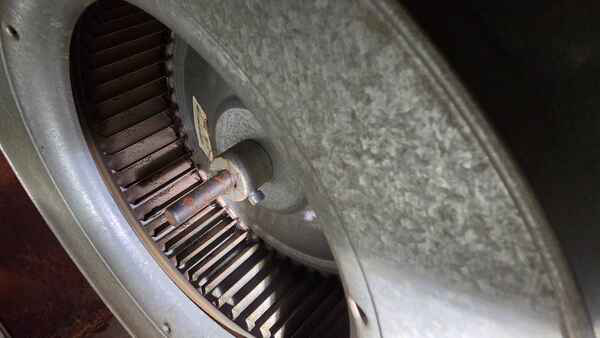
Blower wheel buildup & filtrationPhoto, observation & recommended next step
- What we found
- Buildup was found on the blower wheel and inside the furnace. Gaps in the filter rack allowed air to bypass the filter.
- What the evaluation adds
- The report looks at the equipment and how it is being protected, rather than stopping at an air reading.
- Recommended next step
- Clean the affected HVAC components and correct the filter fit and sealing to address the source of the buildup.
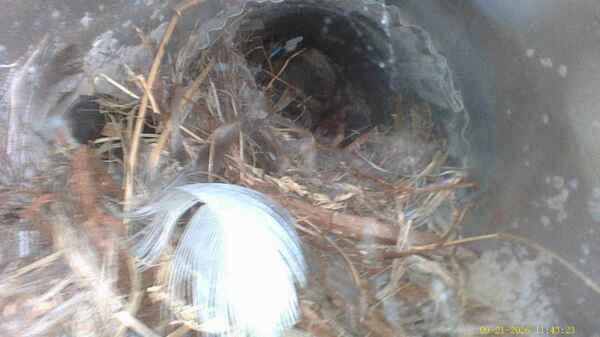
Plugged dryer ventPhoto, observation & recommended next step
- What we found
- A bird’s nest was blocking the dryer exhaust duct. An improperly connected section was also found along the vent route.
- What the evaluation adds
- The evaluation includes accessible exhaust routes and connections, with concerns documented in photographs.
- Recommended next step
- Arrange professional cleaning of the accessible vent path and affected areas, correct damaged or disconnected sections, and verify unobstructed airflow before normal use.
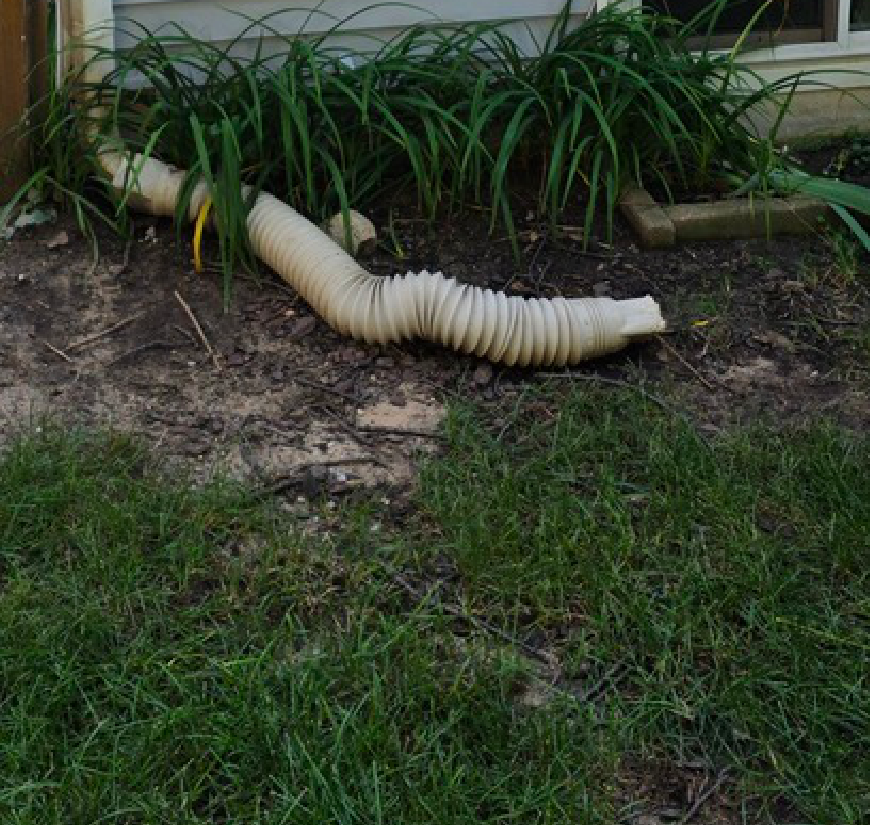
Moisture & exterior drainagePhoto, observation & recommended next step
- What we found
- A blocked gutter, a wet area beside the home and a loose downspout extension near the foundation were documented.
- What the evaluation adds
- Looking at how water leaves the home helps connect exterior observations with the overall moisture evaluation.
- Recommended next step
- Have a gutter contractor inspect and correct the drainage, and direct the downspout discharge farther away from the home.
Let’s find your next step.
Call 616-490-8358 or tell us about your home.